
Care that started with listening!
Manasah Shanti was created with a simple but powerful intention — to make mental health care more accessible, approachable, and meaningful for everyone.
Many people hesitate to seek therapy due to stigma, lack of awareness, or the belief that therapy is only for certain problems. At Manasah Shanti, we believe that everyone experiences challenges, and that therapy is a powerful tool for understanding, growth, and emotional well-being.
The name Manasah Shanti comes from Manas (mind) and Shanti (peace), reflecting the practice’s focus on helping individuals find clarity, balance, and peace of mind.
Support is offered for people across all age groups and genders, and for a wide range of concerns, including work, family, career, relationships, and emotional or personal difficulties.
Manasah Shanti offers a calm, supportive, and non-judgmental space where individuals can feel heard, supported, and empowered to move forward at their own pace.
Meet the founder
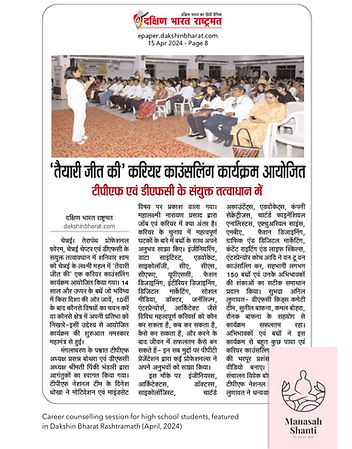
Dolly Jain’s journey into psychology began with a simple curiosity — a genuine interest in people and their stories. What started as listening and observing gradually turned into a deep appreciation for the human mind, and eventually into a profession she truly fell in love with. Over the past five years, Dolly has worked across clinics, schools, and private settings, supporting individuals from different age groups and walks of life.
At the heart of her work is a strong belief that everyone deserves a space where they feel seen, heard, and safe. Her sessions are not about giving advice or quick solutions, but about gently guiding people to understand themselves better, build confidence, and make decisions that feel right for them. Using an integrative, evidence-based approach that blends practical tools with empathy, Dolly focuses on creating conversations that lead to clarity, confidence, and meaningful change.
Dolly works with children, adolescents, adults, and families, and is passionate about helping people improve their quality of life in ways that are meaningful and lasting. She views therapy not only as support during difficult times, but as a space for growth, self-awareness, and everyday emotional well-being — a place where change begins with understanding.
